
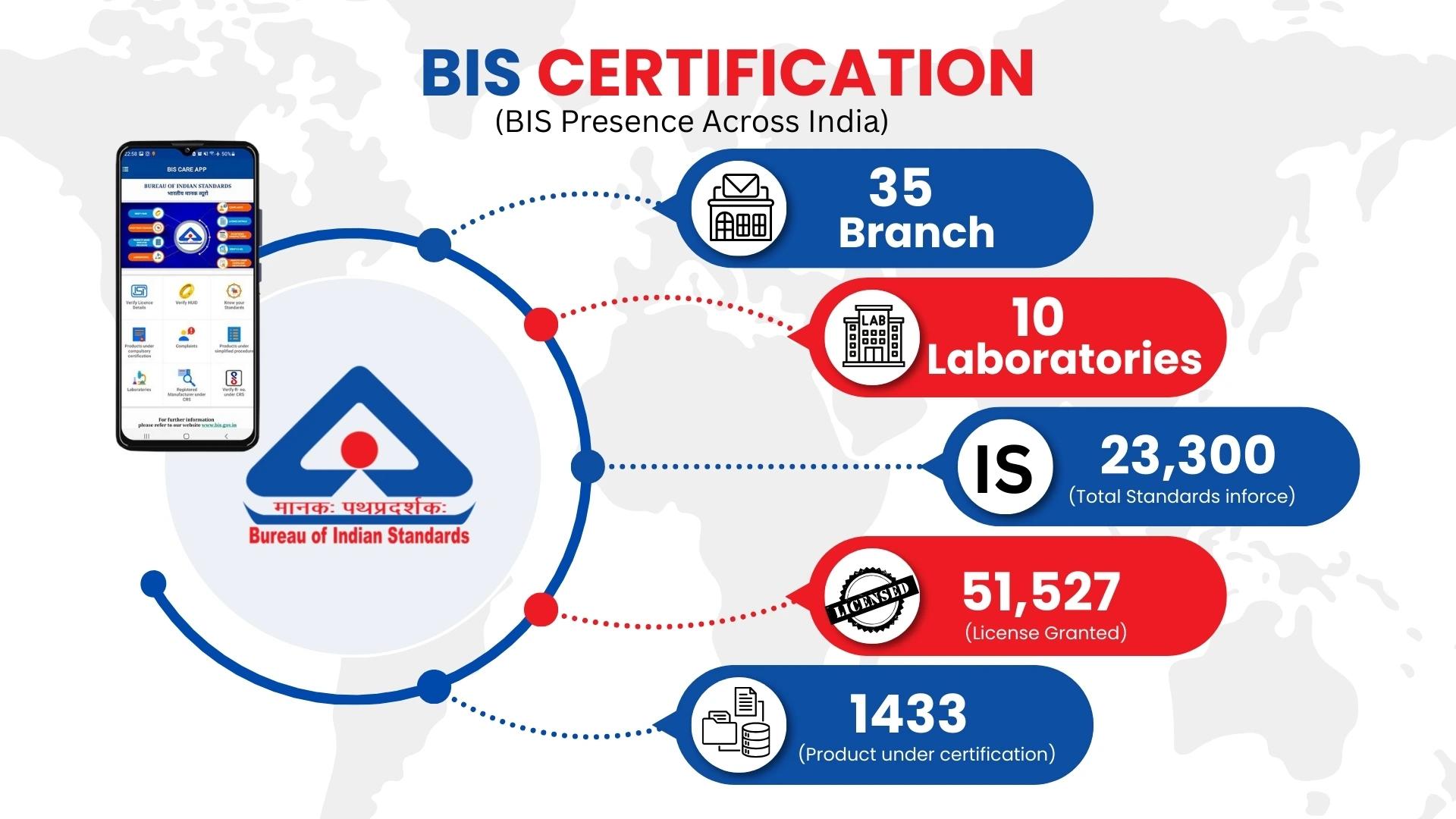
In India, product quality and safety are governed by the Bureau of Indian Standards, commonly known as BIS. BIS certification ensures that products sold in the Indian market meet prescribed quality, safety, and reliability standards. Manufacturers and importers often require BIS approval before launching products in India, especially for regulated categories such as electronics, electrical appliances, steel products, cement, toys, and consumer goods.
BIS certification not only protects consumers but also strengthens the credibility of businesses by ensuring compliance with Indian Quality Standards.
What is BIS Certification?
BIS Certification is a conformity assessment process through which products are tested and verified according to Indian Standards (IS). Once approved, manufacturers are allowed to use the ISI Mark or BIS Standard Mark on their products.
The certification confirms that the product:
- Meets Indian safety and quality requirements
- Has undergone testing in BIS-recognized laboratories
- Complies with manufacturing and inspection norms
- Is safe for consumer use
The BIS scheme is mandatory for many products notified by the Government of India.
Importance of BIS Certification
1. Consumer Safety
BIS certification ensures that products are safe and reliable for public use.
2. Legal Compliance
Many products cannot be imported, manufactured, or sold in India without BIS approval.
3. Market Trust
Consumers prefer certified products because they carry verified quality assurance.
4. Business Expansion
BIS-certified products gain better acceptance in Indian and international markets.
5. Reduction in Product Failures
Testing and inspection reduce manufacturing defects and quality complaints.
Products Requiring BIS Certification
Some commonly certified product categories include:
- Electrical appliances
- LED lights
- Mobile phones
- Steel and cement products
- Toys
- Pressure cookers
- Packaged drinking water
- Batteries
- Electronic goods
- Automotive components
The Indian government regularly updates the mandatory certification list.
Types of BIS Certification Schemes
ISI Mark Certification
Applicable mainly for domestic manufacturers of products covered under mandatory Indian Standards.
CRS Registration
Compulsory Registration Scheme mainly for electronic and IT products.
FMCS Certification
Foreign Manufacturers Certification Scheme for overseas manufacturers exporting to India.
Hallmark Certification
Applicable for gold and silver jewelry purity verification
Step 1: Product Identification
Determine the applicable Indian Standard (IS Code) for the product.
Step 2: Documentation
Prepare required documents such as:
- Business license
- Manufacturing details
- Product specifications
- Test reports
- Factory layout
Step 3: Product Testing
Samples are tested in BIS-recognized laboratories.
Step 4: Factory Inspection
BIS officials may inspect the manufacturing facility.
Step 5: Grant of License
After successful verification, BIS issues the certification license.
Step 6: Use of Standard Mark
The manufacturer can then use the ISI or BIS mark on the product.
Documents Required for BIS Certification
Commonly required documents include:
- Company registration certificate
- GST certificate
- Manufacturing process details
- Product test reports
- Quality control documents
- Authorized signatory details
- Factory address proof
Additional documents may vary depending on the product category.
Benefits of BIS Certification for Businesses
- Increased brand value
- Better customer confidence
- Easier government approvals
- Improved product quality
- Competitive market advantage
- Reduced legal risks
Certified products often perform better in both online and offline marketplaces.
Conclusion
BIS Certification plays a vital role in maintaining product quality and consumer safety in India. Whether you are a manufacturer, importer, or seller, complying with Indian Quality Standards helps build trust, ensures legal compliance, and enhances business growth.
Businesses planning to enter the Indian market should understand the BIS certification requirements applicable to their products and complete the approval process before commercialization.
For companies aiming for long-term success, BIS certification is not just a regulatory requirement—it is a mark of quality and reliability.