
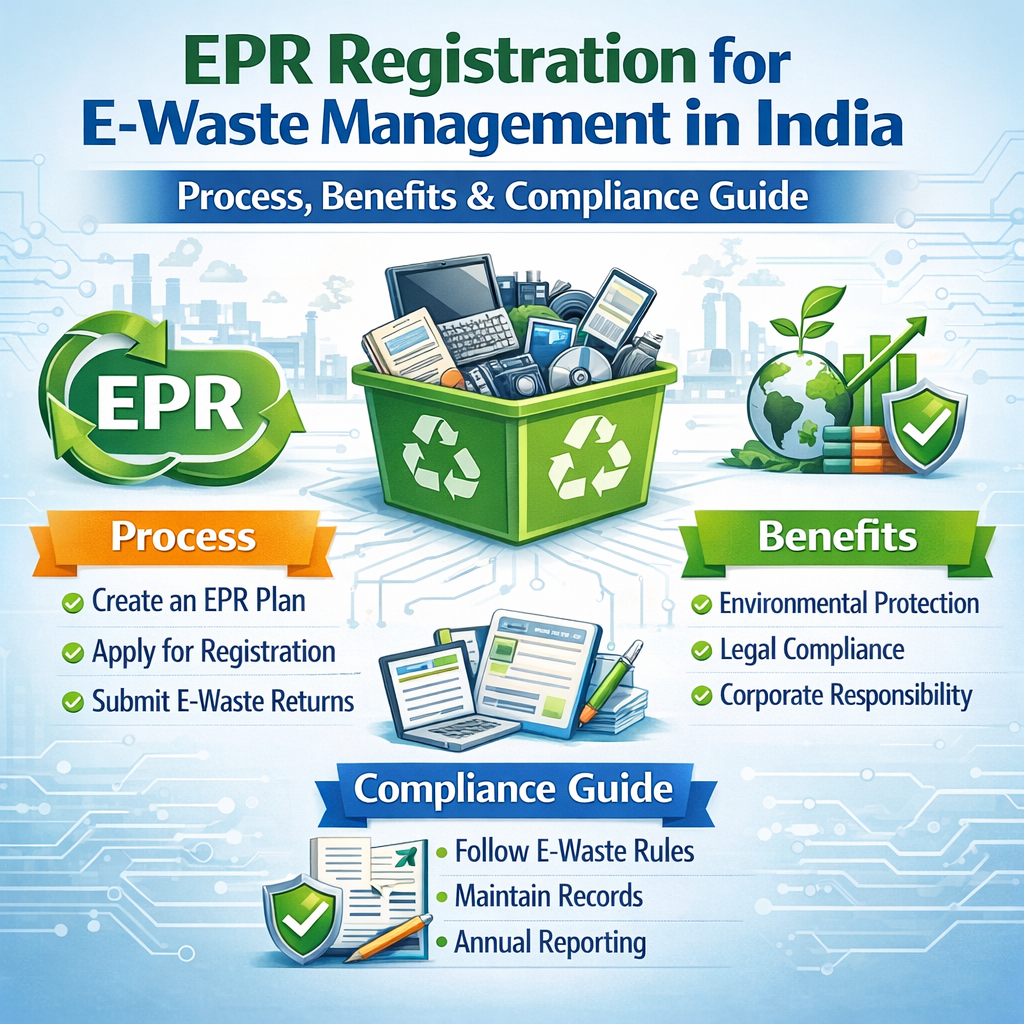
EPR Registration for E-Waste Management in India: Process, Benefits & Compliance Guide
With the rapid growth of electronics and digital devices, e-waste (electronic waste) has become one of the fastest-growing waste streams in the world. To address this challenge, the Government of India has made EPR (Extended Producer Responsibility) registration mandatory for businesses dealing with electronic products.
In this blog, we’ll explain everything you need to know about EPR registration for e-waste management, including its process, requirements, and benefits.
What is EPR for E-Waste Management?
Extended Producer Responsibility (EPR) is an environmental policy that makes producers responsible for managing the lifecycle of their products, especially after they are discarded by consumers.
In India, EPR for e-waste is governed by the E-Waste Management Rules and regulated by the Central Pollution Control Board (CPCB).
It applies to:
- Manufacturers of electronic and electrical equipment (EEE)
- Importers of electronic products
- Brand owners selling electronics under their own label
These entities must ensure proper collection, recycling, and disposal of e-waste through authorized channels.
Why EPR Registration is Mandatory
EPR registration is not optional—it is a legal requirement for businesses dealing with electronics.
Without EPR registration:
- Products cannot be legally sold in India
- Businesses may face penalties and legal action
- Shipments can be delayed or rejected
EPR ensures that companies take responsibility for reducing environmental impact and promoting sustainable waste management.
EPR Registration Process for E-Waste
Here’s a step-by-step overview of the EPR registration process:
1. Applicability Assessment
Determine whether your business falls under EPR obligations based on the type of products you manufacture, import, or sell.
2. CPCB Portal Registration
Register on the CPCB online portal and create your business profile.
3. Documentation Preparation
Prepare required documents such as:
- Company details
- Product information
- Import/export data
- Agreements with recyclers/PROs
4. EPR Plan Submission
Submit a detailed EPR plan outlining:
- Collection mechanisms
- Recycling strategy
- Channel partners
5. Approval from CPCB
After review and verification, CPCB grants EPR authorization.
6. Compliance & Reporting
Maintain records, meet collection targets, and file annual returns regularly.
Key Requirements for EPR Registration
To obtain EPR authorization, businesses must:
- Register with CPCB
- Partner with authorized recyclers or PROs
- Define collection and recycling targets
- Maintain proper documentation and records
- Submit periodic compliance reports
Benefits of EPR Registration
1. Legal Compliance
Ensures your business meets environmental regulations and avoids penalties.
2. Environmental Responsibility
Promotes safe recycling and reduces environmental pollution.
3. Brand Reputation
Demonstrates your commitment to sustainability and corporate responsibility.
4. Market Access
Enables smooth sale and distribution of products across India.
5. Business Growth
Enhances credibility with stakeholders, investors, and customers.
Challenges in EPR Compliance
Businesses often face challenges such as:
- Complex documentation and regulations
- Difficulty in meeting recycling targets
- Managing multiple compliance requirements
- Finding authorized recyclers and PROs
Professional consultancy can simplify the process and ensure smooth compliance.
How Cee Em Exports Can Help
At Cee Em Exports Pvt. Ltd., we provide complete support for EPR registration and compliance. From documentation and CPCB registration to recycler coordination and annual reporting, we ensure a hassle-free experience.
Our expertise helps businesses achieve compliance efficiently while focusing on their core operations.
Conclusion
EPR registration for e-waste management is a crucial step toward building a sustainable and responsible business. With increasing regulatory focus and environmental concerns, compliance is not just mandatory—it’s a strategic advantage.
By obtaining EPR registration, businesses can ensure legal compliance, enhance brand value, and contribute to a cleaner and greener environment.